I've been looking at one technique to get around the problem of very small depths of field when shooting macros with an extension tube. I found a while ago that small apertures aren't necessarily the answer: the tiny aperture can lead to fuzziness due to diffraction and even with stopping down to f22, the DOF still isn't huge.
I was inspired by a few posts on DP Review, in particular this one (see the last image and comments beneath it), to have a try at image-stacking. Basically, to get around the DOF problem, you take a series of photos of the subject at (very) slightly different distances (but not refocusing) so different parts of the subject will be in focus. Using a focussing rack I was able to do this very easily. The distance to move each time is a bit arbitrary, but as you'll see I didn't do that badly in the end.
Before reading the DPR post I was wondering how I was going to combine the images. Problem solved courtesy of some free software called CombineZM. Basically, you just load the series (or "stack") of images into the program and it does the rest - pretty well! There are loads of parameters that you can change with the program and in some ways it lacks the "polish" of some software, but I'm really pleased with the results it gives "straight out of the box", so to speak.
Below is my first attempt. The subject is about 2cm across and I didn't use any fancy lighting, just a couple of lamps pointing in the general direction. There were 10 images in the stack.
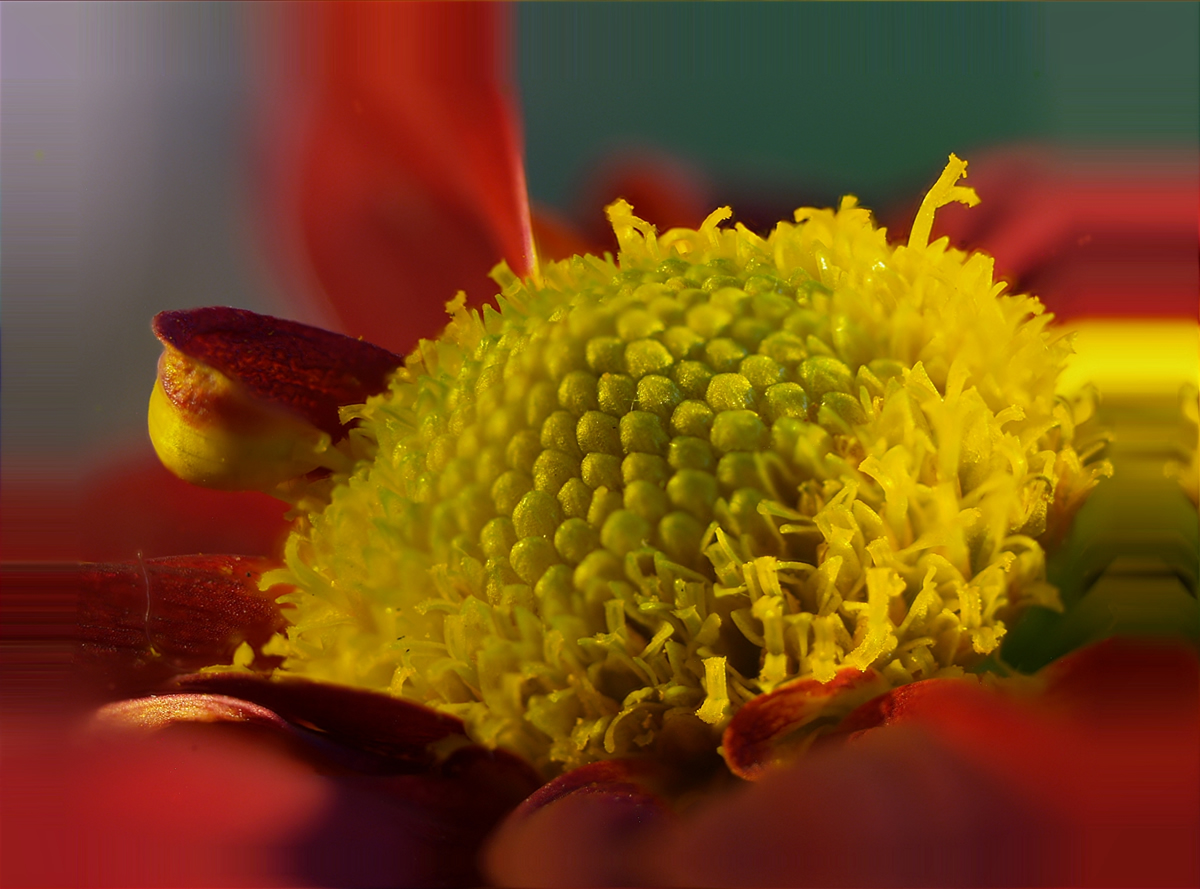
I was really pleased with the way it turned out, bearing in mind it was my first attempt and I hadn't paid much attention to any technique, really.
I used my 50mm macro plus 25mm extension tube. (At least I think I used the Ex tube..).
If you look closely you can see a blurred band, just behind the centre of the flower, where I obviously moved the camera too far in one of the steps. It's easier to see in the larger version of the photo.
Made from 10 images
The next few were taken with a more ambitious set up; out came flash brackets, telescopic extension tube, etc. In fact the kit in between the subject and the camera consisted of: 50mm macro lens, 56-116 telescopic extension tube, 25mm extension tube. At full extension that meant 141mm worth of extension tubes. For flash I had my external flash unit, with some white paper taped over the front to act as a diffuser.
The initial results were interesting, if actually a bit disappointing. The flash was producing lots of blown highlights and the image was often blurred.
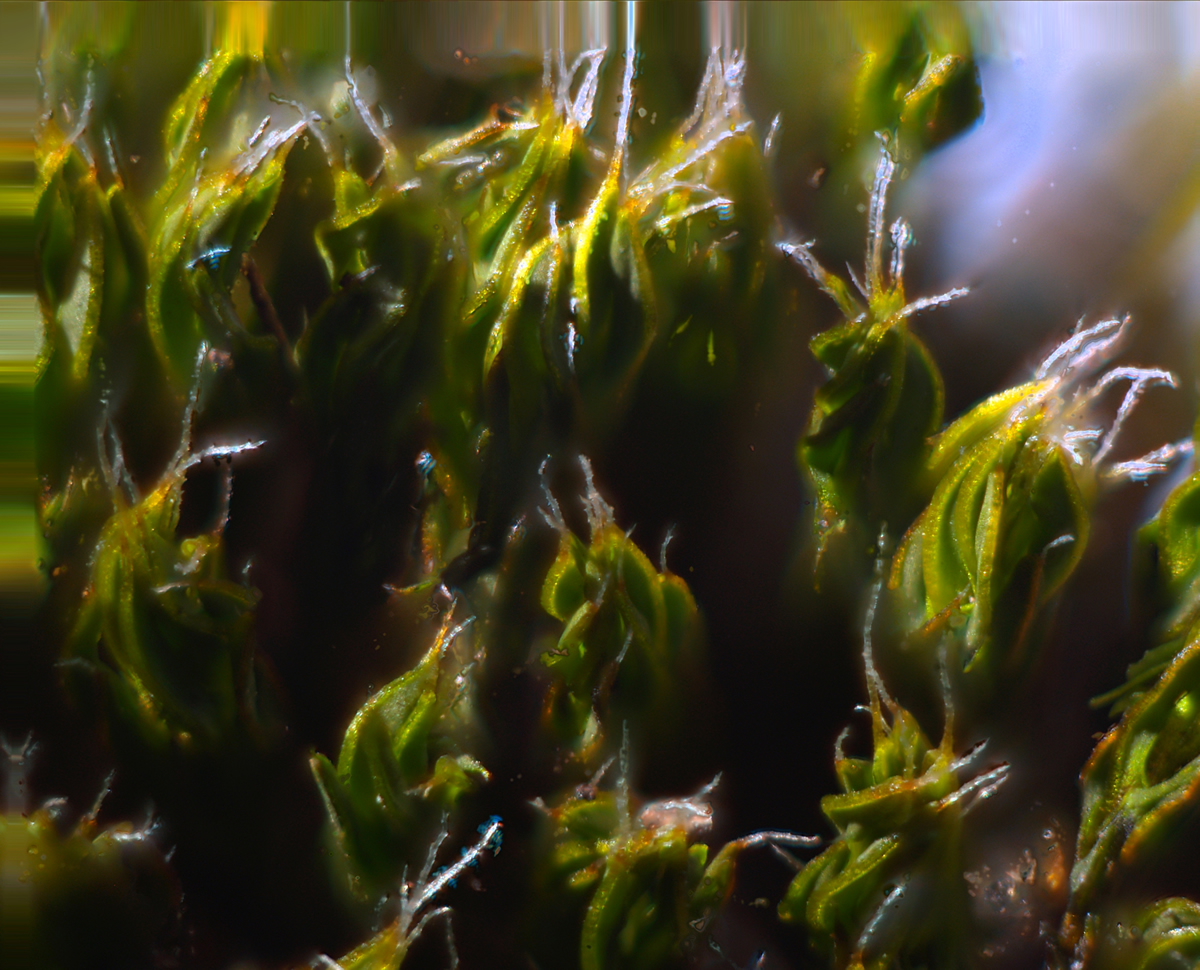
Here's the first that's anywhere near good enough to show: it's part of a clump of moss from the roof. It's an interesting effect, there's a 3-D look to the image but it's a bit blurry.
I don't really know what's going on there; click here to see the large version. With such a large magnification maybe I'm asking too much of the software, perhaps the gaps are too big between each layer, who knows..?
Made from about 30 images.
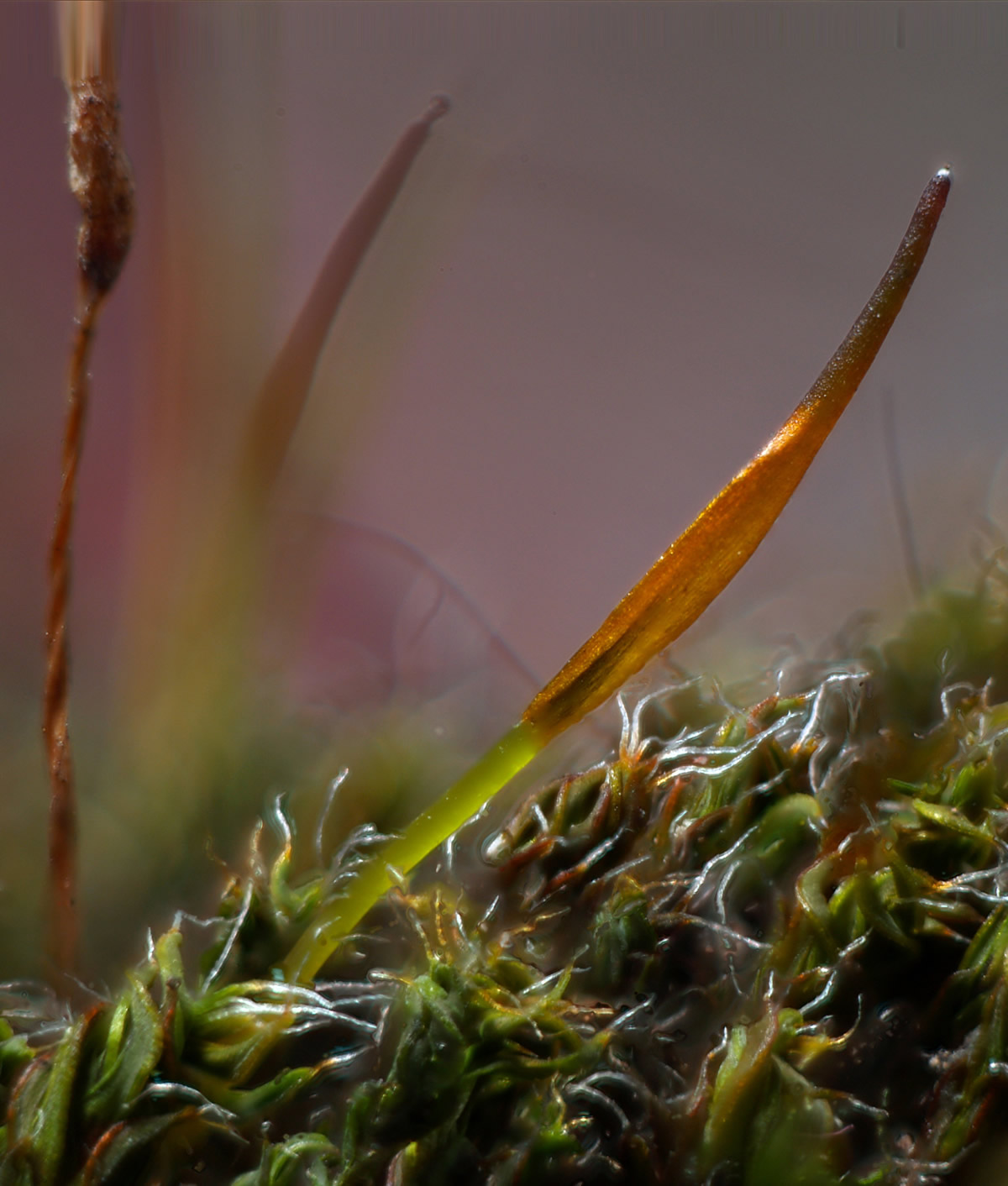
This one's a bit more pleasing. I reduced the length of the extension tube so the magnification wasn't as great. It's still not that good, there's that large blurred area on the left hand side (produced by something out of focus?) and the rest of the image (apart from the fruit) looks as though you're looking at it through the bottom of a jam jar. In fact you could probably get the same [or better] results without all this stacking business.
Made from about 20 images.
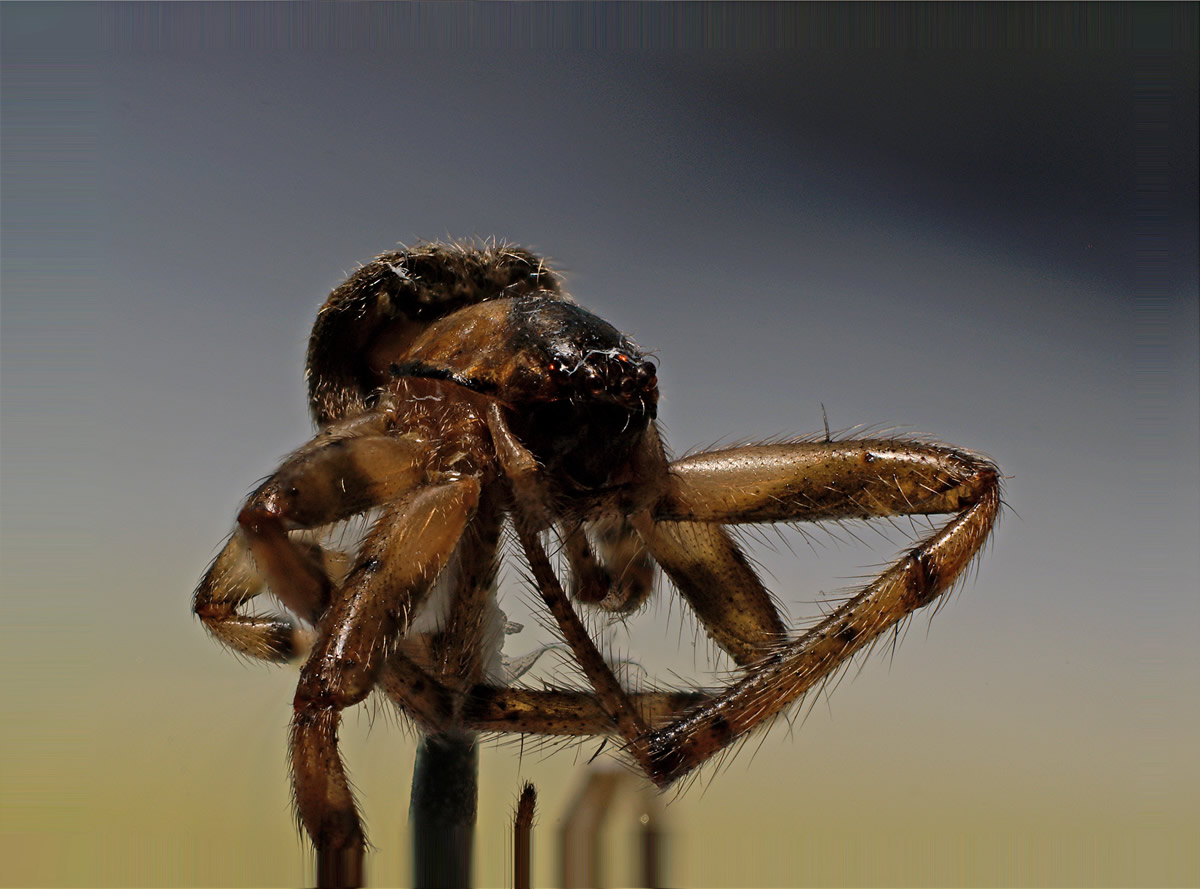
Here's a dead spider. Quite pleased with this one. Larger version.
Made from about 20 images.
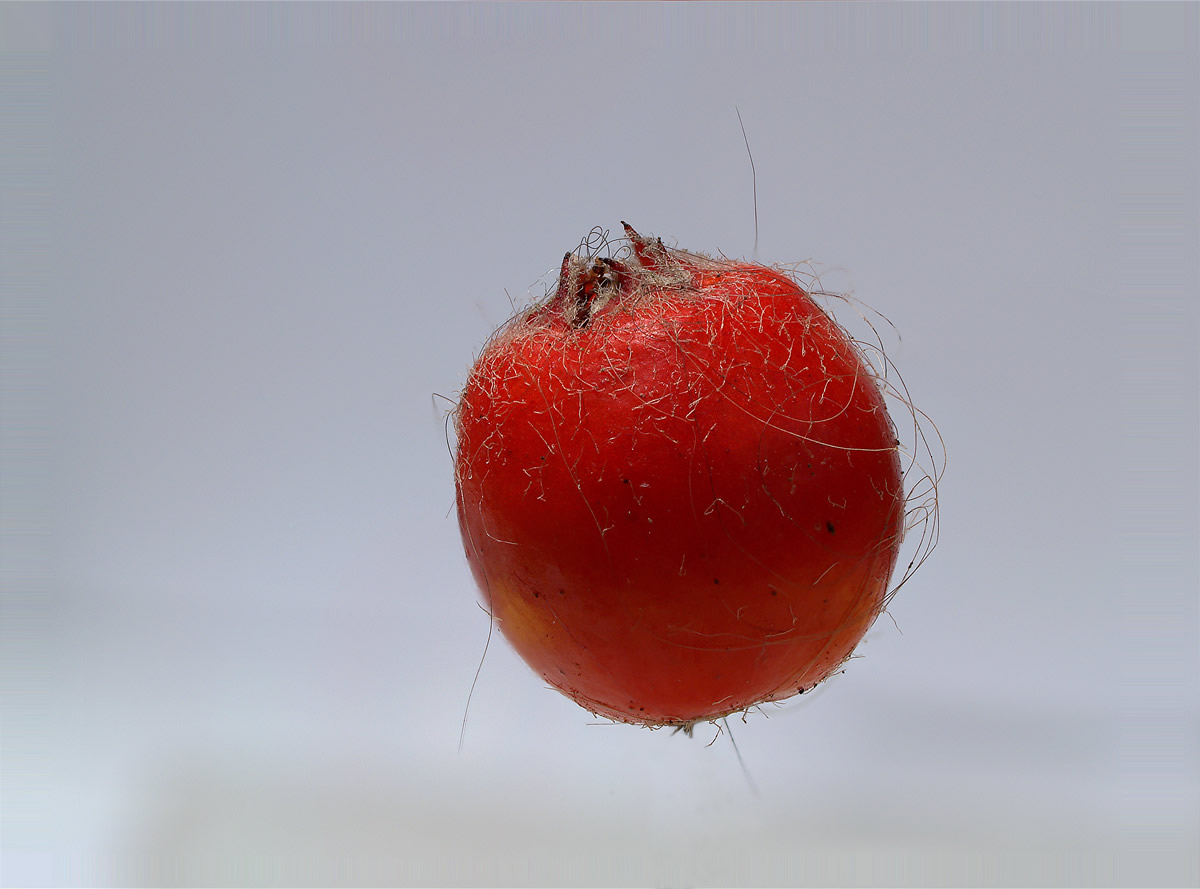
I'm really pleased with this Cotoneaster berry. It was mounted on a pin, which I decided to clone out for fun. The detail in the larger version is good. In fact here's the full size version to see more detail - I never knew these berries were hairy! (Internet Explorer may reduce the viewing size of the large image, you may need to right click and save and then view on your PC).
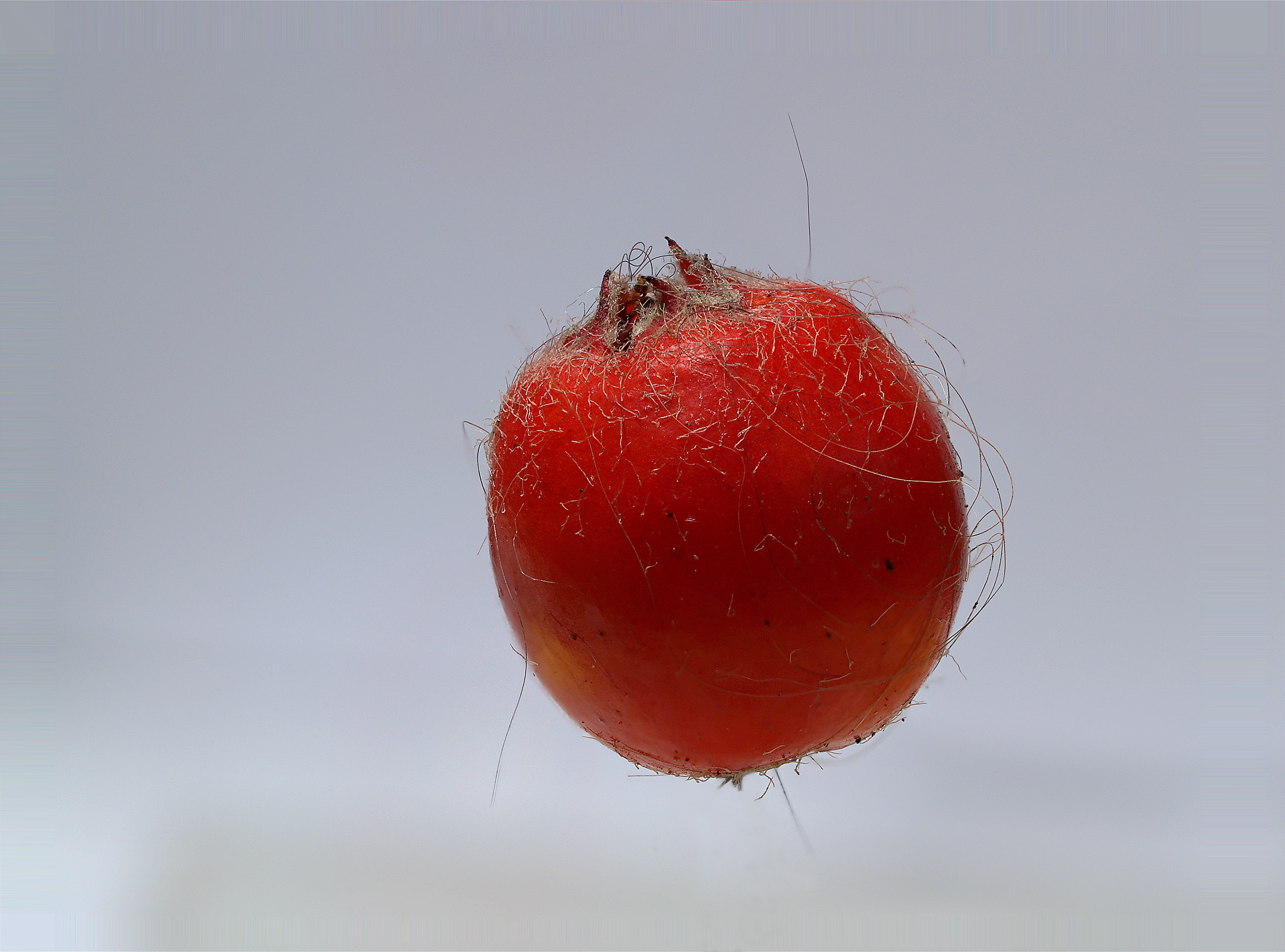
Made from about 18 images.
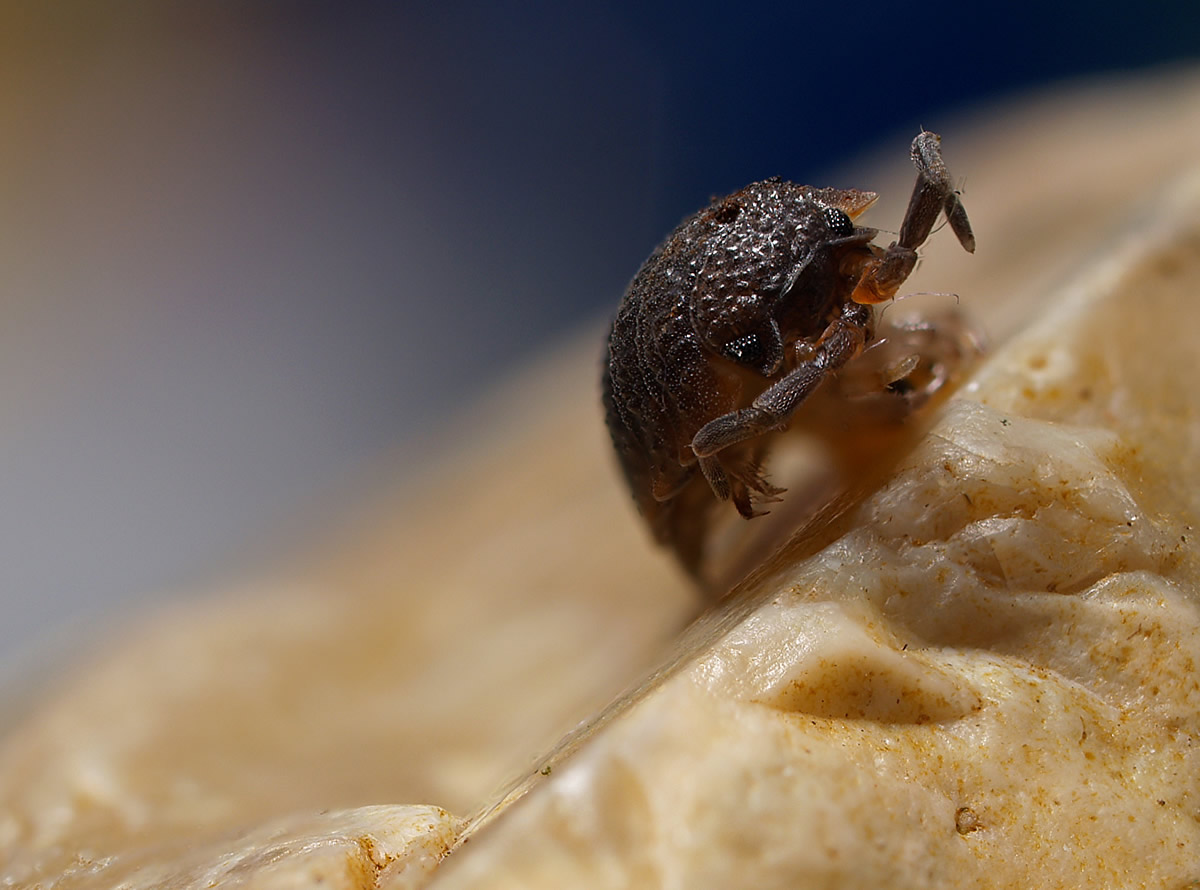
Dead woodlouse. (Beggars can't be choosers in mid-winter)!
Made from about 12 images. Larger version.